

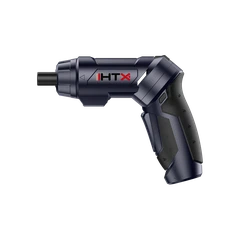
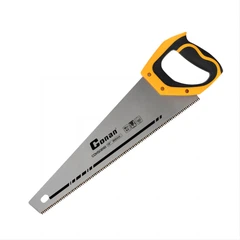
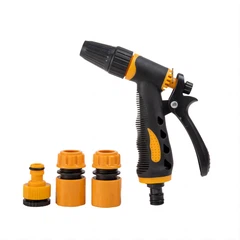
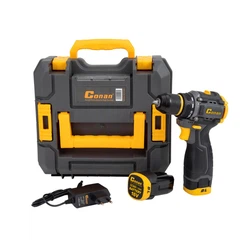
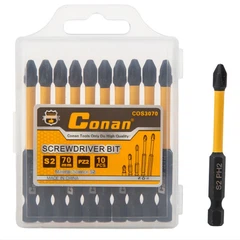
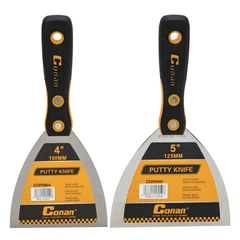

Common tools for car maintenance and maintenance include electric and pneumatic tools such as wrenches, pliers, screwdrivers, jacks, and piston ring dismounting pliers.
The use of common tools
1. Wrench
A wrench is one of the most commonly used tools in auto repair, mainly for twisting bolts. Nuts or threaded parts. There are many kinds of wrenches, and the common ones are ring wrenches, open-end wrenches, socket wrenches, adjustable wrenches, torque wrenches, etc. When disassembling the bolts, the selection principle should be selected according to the selection principle of "socket wrench first, then plumbing wrench, then open-ended wrench, and finally adjustable wrench".
When choosing a wrench, pay attention to the size of the wrench. The size means that the distance between the corners of the bolts or nuts that it can twist is 22mm.
Common tools now have both metric and imperial units of measurement. The conversion relationship between metric system and imperial system is: 1mm=0.039 37 in.
A socket wrench is the most convenient, flexible and safest tool for removing bolts. It is not easy to damage the corners of the nut with a socket wrench.
According to the size of the socket head, there are two types of large size and small size. The large size socket head can obtain a larger torque than the small size socket head.
Classified according to the shape of the jaws, there are two types of sleeves: double hexagonal and hexagonal. The hexagonal part has a large contact surface with the surface of the bolt and nut, so that it is not easy to damage the surface of the bolt/nut. The distance between the corners of the double hexagon socket is only 30°C, which can easily cover the bolts and is suitable for removing bolts in narrow spaces.
The double hexagonal socket cannot disassemble bolts with high torque or worn edges, because the contact surface between them and the bolts is small, and it is easy to damage the edges and corners of the bolts or slip off, resulting in safety accidents.
(1) Socket adapter.
The sleeve adapter is also called the sleeve conversion joint, which is used in conjunction with the existing handles and sleeves of different sizes, such as a 10mm series handle connected to a 12.5mm series sleeve or a 12.5mm series handle connected to a 10mm series sleeve Tubes, etc. require adapters. There are two types of adapters, one is "small" - "big", and the other is "big" - "small".
(2) Universal joint.
The square sleeve part of the universal joint can move back and forth or left and right, and the angle between the matching handle and the sleeve can be changed freely.
The socket wrench is vertically connected to the matching handle, but the socket cannot be inserted in many places on the vehicle. At this time, the universal joint will provide the greatest convenience, and it can provide a larger space for changing direction than the bendable joint.
(3) Adapter.
Adapters, also known as extension rods or extension rods, are an integral part of socket-type tool kits. In daily car maintenance work, there are different lengths of extension rods such as 75mm, 125mm, 150mm and 250mm for selection, which are what we often call long extension rods and short extension rods.
The main function of the extension rod is to be installed between the sleeve and the matching handle for disassembly and replacement of bolts that are installed so deep that the sleeve and the handle cannot be touched.
In addition, when disassembling bolts and nuts on a flat surface, the tools will cling to the operation surface, hindering normal disassembly, and even causing safety accidents. The post can lift the tool to a certain height from the plane for easy operation.
There are many posts that have been modified to have special features, such as steering posts and locking posts. The so-called steering rod refers to the connection between the ordinary rod and the sleeve. After the sleeve is improved and installed, it will produce a deflection angle of about 10°, so it is very convenient to use. The locking post means that the post has a socket locking function, that is to say, there is no need to worry about the falling of the socket or the universal joint joint during use.
(4) handle.
①Sliding bar, also called sliding T-shaped bar, is a special supporting handle for the sleeve, and the cross bar can be slid and adjusted. Through the sliding part, the handle can be used in two ways, forming a T-shaped structure, and two hands are forced at the same time, which can increase the disassembly speed, but requires a large working space.
②Rotary handle is also called shaking head handle or plate rod, which can be used to remove or replace bolts or nuts that require high torque, and can also be rotated quickly after adjusting the handle, but the handle is very long and difficult to use in a narrow space. The head of the rotating handle can be moved in a hinged manner, so that the angle of the handle can be adjusted for use according to the requirements of the working space.
③The ratchet handle is the most common sleeve handle, and the sleeve handle is a matching handle installed on the sleeve to pull the sleeve. If there is no matching handle, the sleeve will not be able to work independently.
The head of the ratchet handle is designed with a ratchet device, which can realize fast one-way rotation without detaching from the sleeve and the bolt.
The rotation direction can be changed by adjusting the locking mechanism: turn the locking mechanism handle to the left, and it can be single-handed.
Tighten the bolts or nuts clockwise; turn the handle of the locking mechanism to the right to loosen the bolts or nuts counterclockwise in one direction.